The Thinking Man's Guide to Beard Care
Everything you need to know about building a beard routine that actually works — from wash to wax.
Most beard products are solving the wrong problem
Walk into any men's grooming section and you'll find beard oils made from silicones and synthetic fragrances, beard washes loaded with sulfates, and balms thickened with petroleum. They smell nice for about twenty minutes. Your beard feels good for about an hour. Then you're back to square one — dry skin, coarse hair, and that persistent itch under the surface.
The problem isn't that your beard is difficult. The problem is that most products are designed to coat hair rather than nourish it. There's a difference.
Why tallow works for beards (the biology)
Your skin produces sebum — a waxy, oily substance that naturally moisturizes both your skin and hair. Sebum is primarily composed of triglycerides, wax esters, squalene, and fatty acids. Here's what's interesting: the fatty acid profile of grass-fed beef tallow is remarkably similar to human sebum.
That matters because your skin has evolved to absorb and utilize these specific types of fats. When you apply a tallow-based beard oil, your skin doesn't treat it as a foreign substance sitting on the surface — it recognizes the fats and puts them to work.
This is why tallow-based products tend to absorb faster, last longer, and cause less buildup than their synthetic counterparts.
The four-step beard routine (and why each step matters)
A solid beard care routine has four components. You don't always need all four every day, but each one serves a distinct purpose.
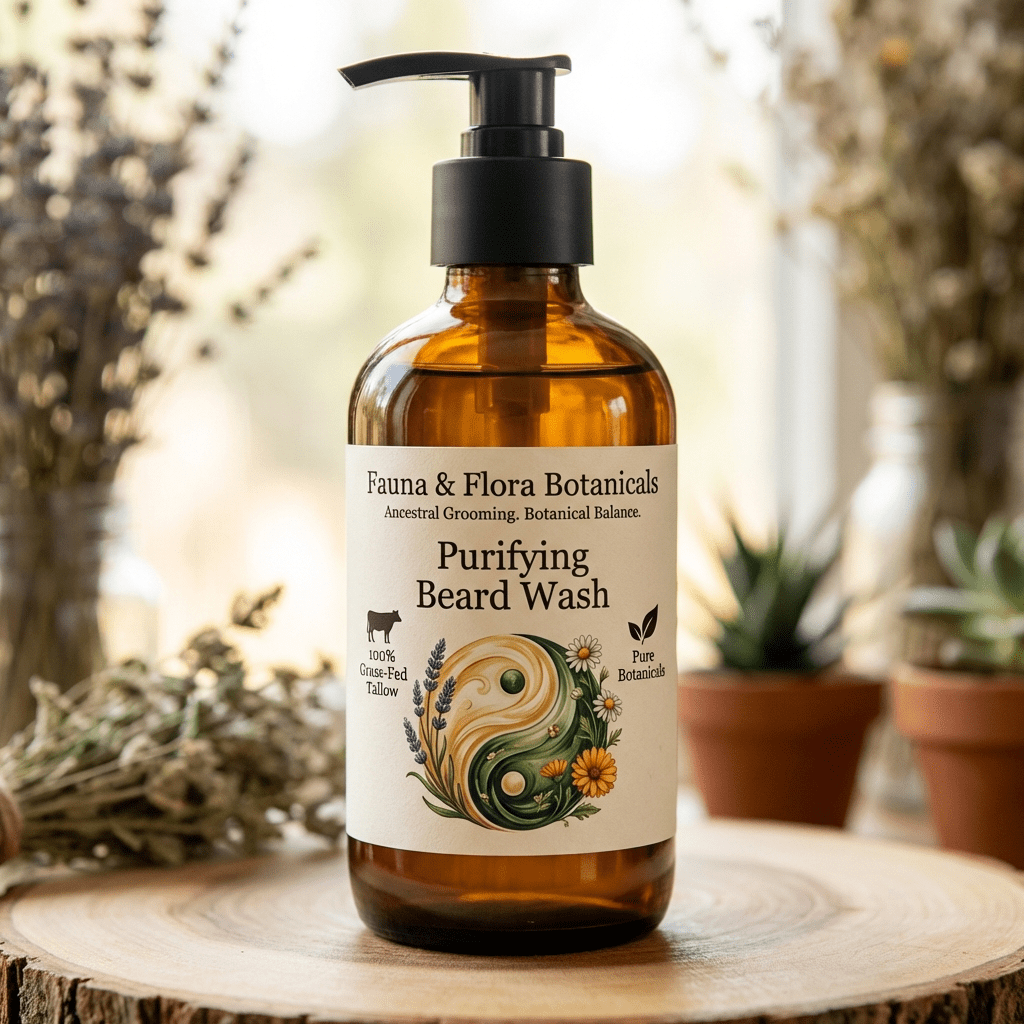
Step 1: Cleanse — Purifying Beard Wash
When: Daily or every other day, depending on your activity level and environment.
Regular shampoo and body wash are too harsh for beards. They strip the natural oils from both the hair and the skin underneath, triggering your sebaceous glands to overproduce oil — which leads to that greasy-by-noon cycle many bearded men know well.
A tallow-based beard wash works differently. Saponified tallow creates a gentle lather that lifts dirt and excess oil without disrupting the moisture barrier. Think of it as cleaning the surface without stripping the foundation.
Pro tip: Wash your beard at the end of your shower when warm water has had time to open the pores and soften the hair. This makes cleansing more effective and less abrasive.
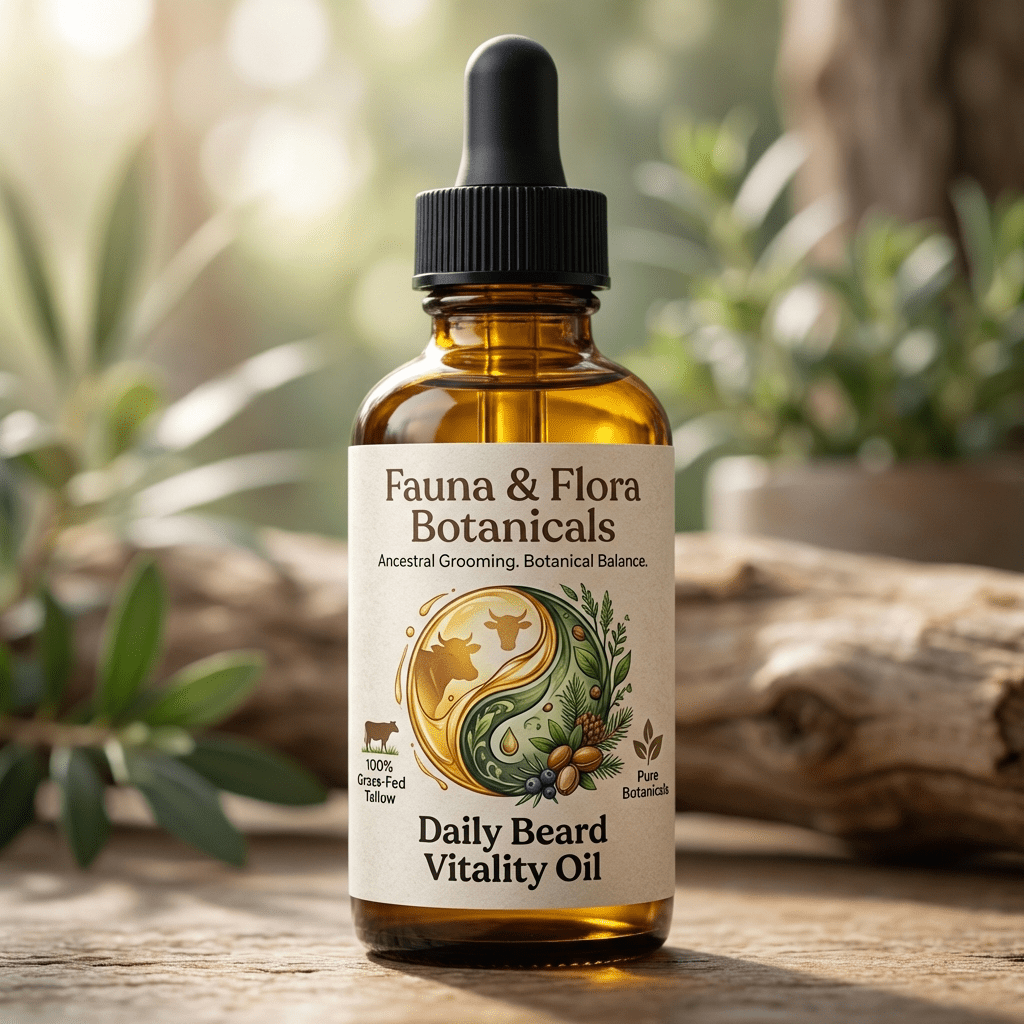
Step 2: Nourish — Daily Beard Vitality Oil
When: Every morning after washing or showering.
Beard oil is the foundation of daily maintenance. A good one should do three things: soften the hair shaft, hydrate the skin beneath, and absorb quickly enough that your beard doesn't feel oily.
A tallow-jojoba-argan blend hits all three. The tallow provides deep, sebum-mimicking hydration. Jojoba oil (technically a liquid wax) closely resembles your skin's own oils and helps regulate oil production. Argan oil adds vitamin E and essential fatty acids that condition the hair itself.
How much to use: 3-5 drops for a short-to-medium beard. 5-8 drops for a longer beard. Warm between your palms, then work from the skin outward — this ensures the skin underneath gets nourished first.
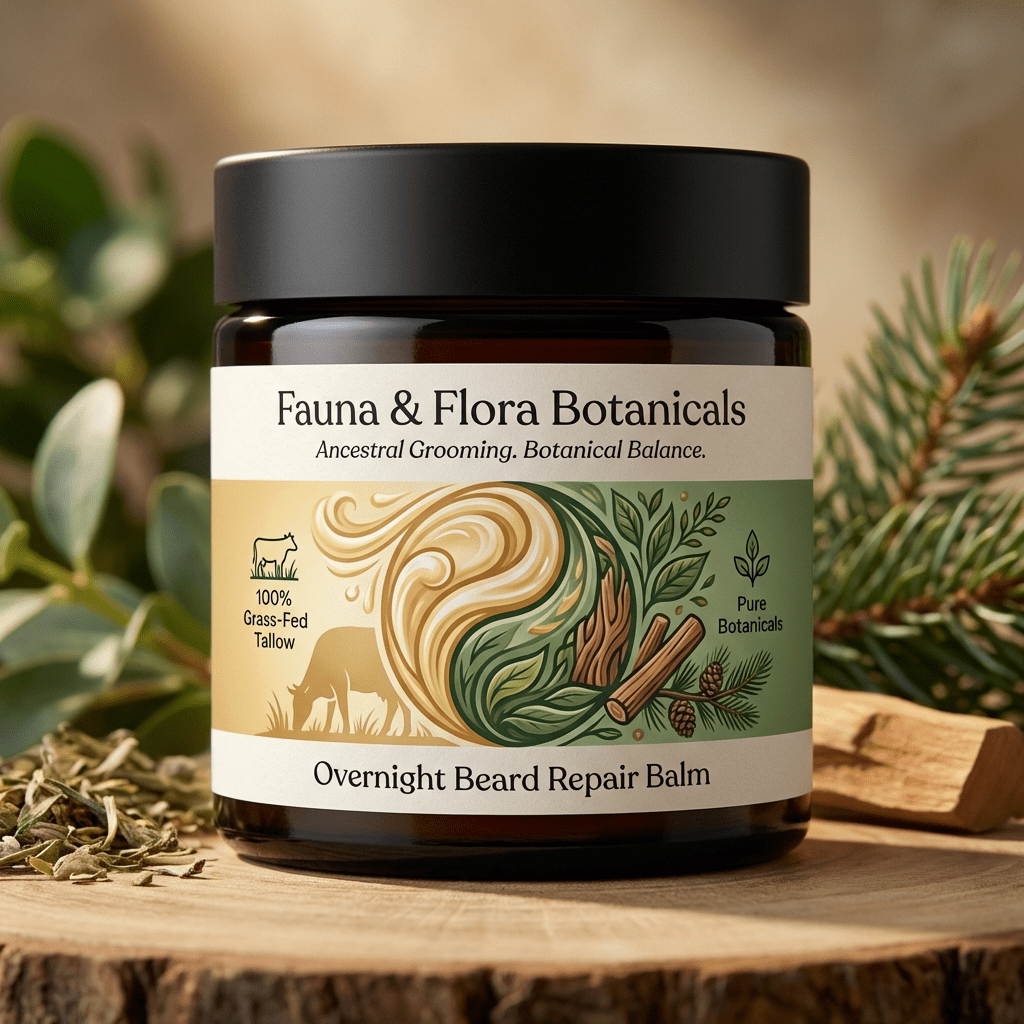
Step 3: Condition — Overnight Beard Repair Balm
When: Nightly, or 2-3 times per week for shorter beards.
If beard oil is your daily maintenance, balm is your deep treatment. A tallow-and-shea-butter balm is thicker, slower to absorb, and designed to sit on the hair and skin overnight, delivering sustained moisture while you sleep.
This is especially important during cold months when indoor heating and wind create a one-two punch of dryness that oil alone can't counteract. The beeswax in the balm creates a protective barrier that seals in moisture for hours.
Application: Scrape a thumbnail-sized amount. Warm between palms until fully melted. Work through the beard from roots to ends, giving extra attention to the chin and cheekline where dryness tends to concentrate.
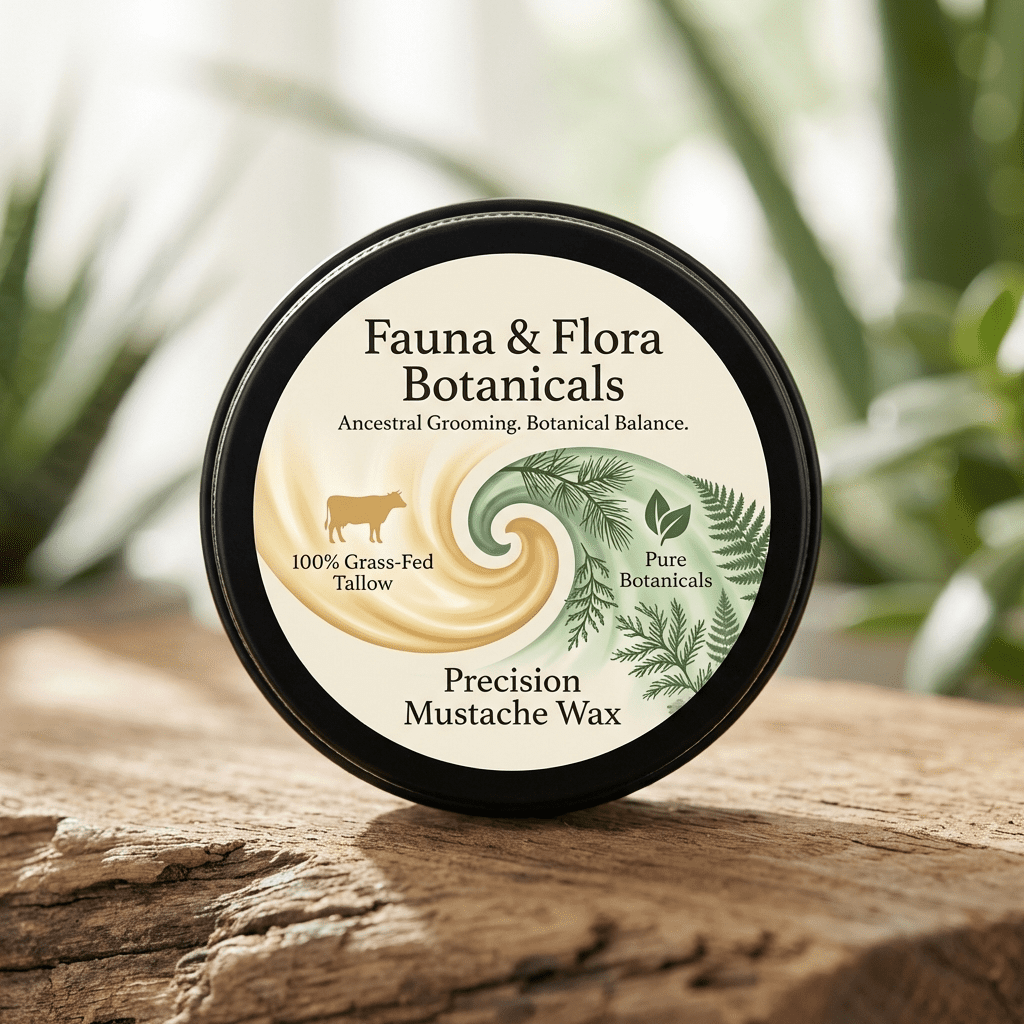
Step 4: Style — Precision Mustache Wax
When: Morning, after oil application.
Not everyone needs a mustache wax, but if you're growing a mustache past the lip line or working toward handlebars, a natural hold is essential. Most commercial mustache waxes rely on petroleum-based ingredients that sit on the hair without conditioning it.
A beeswax-and-tallow wax provides firm hold with actual nutritional benefit. The tallow conditions while the beeswax provides structure. Pine resin adds natural tackiness for hold that lasts through meals without feeling like you've lacquered your face.
Matching the routine to your beard stage
Stubble to 1 month: You mainly need oil. Apply daily to prevent the itchy growth phase. The oil keeps the new hair soft and the skin underneath hydrated.
1-3 months: Add the beard wash. At this length, you're accumulating enough product, dead skin, and environmental debris that a dedicated cleanser makes a noticeable difference.
3-6 months: Introduce the balm. Medium-length beards start losing moisture from the ends, and the overnight balm addresses this before you see visible dryness.
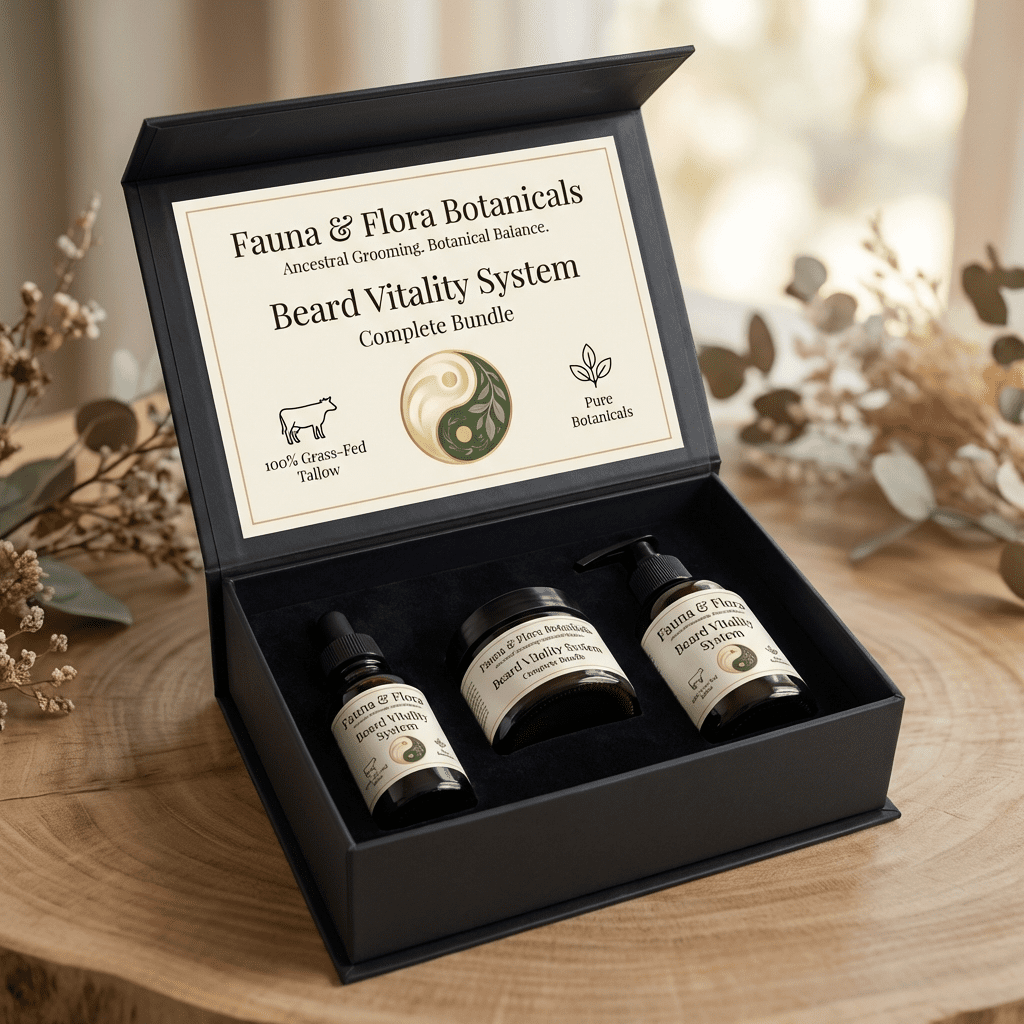
6+ months: The full system. Long beards need cleansing, daily oil, overnight conditioning, and (if applicable) styling. This is where the complete routine pays for itself in time saved detangling and managing unruly hair.
Common mistakes (and how to avoid them)
Washing too often with the wrong products. If you're using regular shampoo on your beard, you're creating the dryness you're trying to fix. Switch to a tallow-based beard wash and your skin will rebalance within a week.
Applying oil to a dry beard. Always apply to a damp beard — either fresh from the shower or after splashing your face with water. Damp hair absorbs oil far more effectively than dry hair.
Skipping the skin underneath. Your beard grows from the skin. If the skin is dry, irritated, or flaking, no amount of oil on the hair shaft will fix it. Always work products down to the skin first, then pull through the hair.
Using too much product. A little goes a long way with tallow-based products because they absorb rather than coat. Start with less than you think you need. You can always add more.
The bottom line
A great beard isn't high-maintenance — it's well-maintained. The difference is a routine that works with your biology rather than against it. Tallow-based beard care does exactly that: it feeds your skin and hair the same fats they naturally produce, delivered in concentrated form.
Four products. Five minutes a day. A beard that looks and feels like you know what you're doing. Because you do.