The Ultimate Guide to Natural Body Care
Why your skin deserves better than synthetic lotions — and what to use instead.
Your skin is your largest organ. Start treating it like one.
Walk down the body care aisle at any drugstore and you'll find rows of lotions promising 24-hour moisture, deep hydration, and silky-smooth skin. Flip them over and read the ingredients: water, cetearyl alcohol, dimethicone, fragrance, methylparaben. That's what most people are rubbing into their largest organ every single day.
Here's the thing — your skin doesn't need complicated chemistry. It needs fats and botanicals it actually recognizes.
The problem with conventional body lotions
Most commercial lotions are oil-in-water emulsions. They're roughly 70% water held together by synthetic emulsifiers and thickened with silicones that create the illusion of moisture. That initial "smooth" feeling? It's a silicone film sitting on top of your skin. The actual hydrating ingredients — if there are any — make up a tiny fraction of the formula.
Within an hour or two, the water evaporates. The silicone film stays behind, trapping whatever was underneath (including sweat, bacteria, and dead skin cells). And you reach for the bottle again.
This is by design. Products that truly moisturize don't need to be reapplied every few hours.
What "ancestral body care" actually means
Before petroleum jelly was patented in 1872, people used animal fats and plant oils to care for their skin. Not because they didn't have options — because these ingredients worked. Tallow (rendered beef fat) was a staple in European apothecaries. Shea butter was central to West African skincare traditions. Olive oil was the Mediterranean's all-purpose moisturizer.
These ingredients share something important: their fatty acid profiles are remarkably similar to human sebum, the oil your skin produces naturally. That's not a coincidence. It's biology.
Ancestral body care simply means returning to ingredients your skin evolved alongside — and skipping everything it didn't.
The three pillars of a complete body care routine
Good body care isn't complicated. It comes down to three things, done well:
1. Exfoliate: Remove what's dead
Dead skin cells accumulate constantly. If you don't remove them, moisturizers sit on top of a barrier they can't penetrate. That's why you can slather on lotion and still feel dry — the moisture never reaches living skin cells.
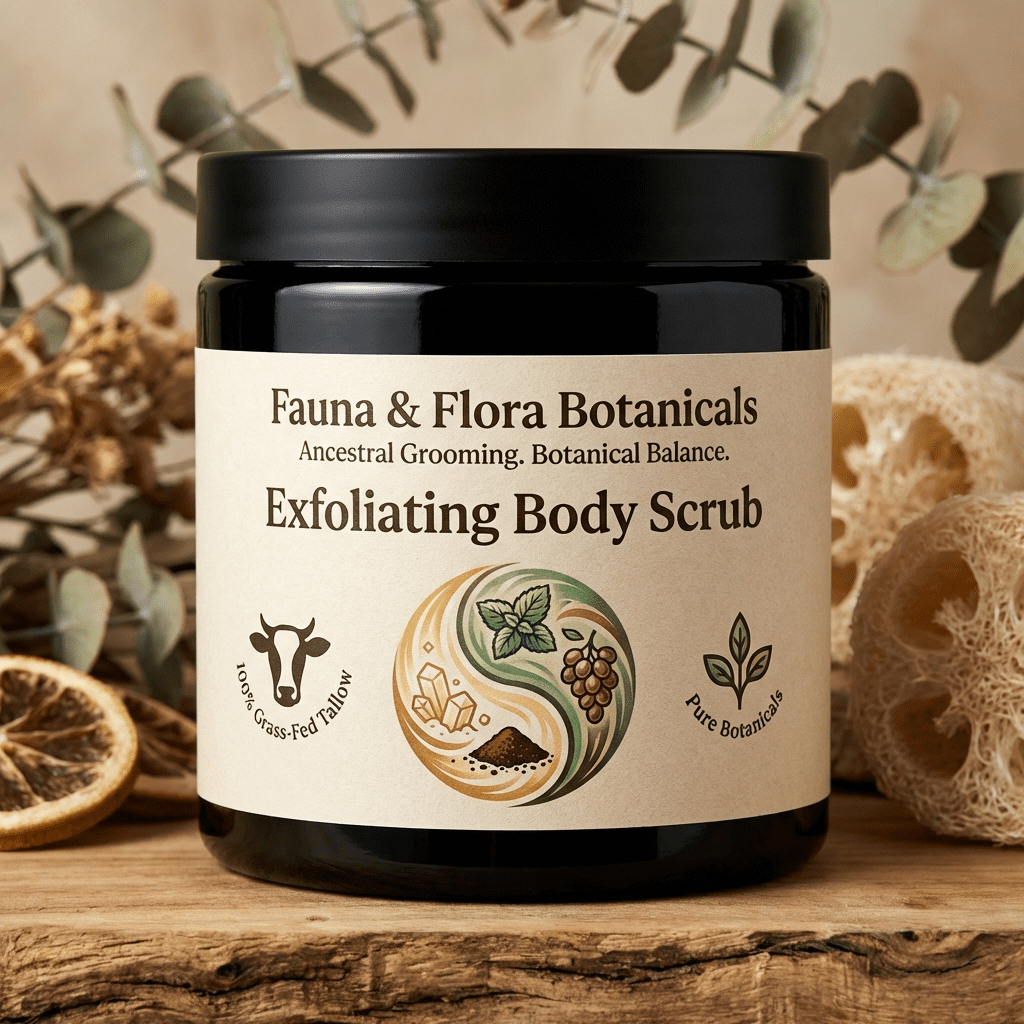
A physical exfoliant like organic cane sugar dissolves as you scrub, so it can't over-abrade. When paired with tallow and olive oil, you get simultaneous exfoliation and moisturization. By the time you rinse, fresh skin is already hydrated. No post-scrub lotion required.
What to look for: A sugar-based scrub in a tallow or oil base. Avoid scrubs with plastic microbeads or synthetic fragrances.
2. Hydrate: Feed your skin the fats it needs
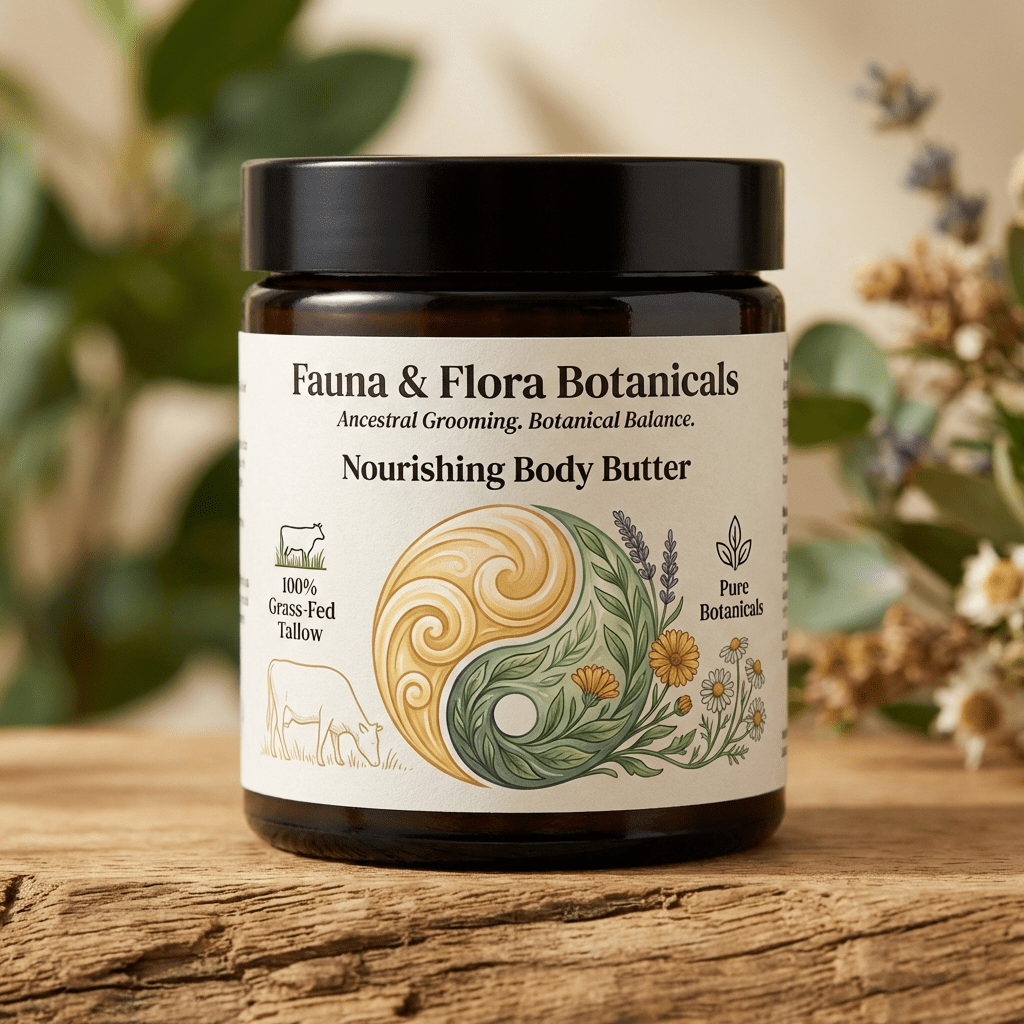
This is where tallow really shines. Grass-fed beef tallow contains the same fatty acids (stearic acid, oleic acid, palmitic acid) that make up roughly 50% of human cell membranes. When you apply tallow-based body butter to warm, damp skin, it doesn't sit on the surface — it integrates.
Combine tallow with shea butter for additional ceramide support and coconut oil for fast absorption, and you get a formula that provides genuine, lasting hydration. The kind where you apply it after a shower and your skin still feels comfortable at bedtime.
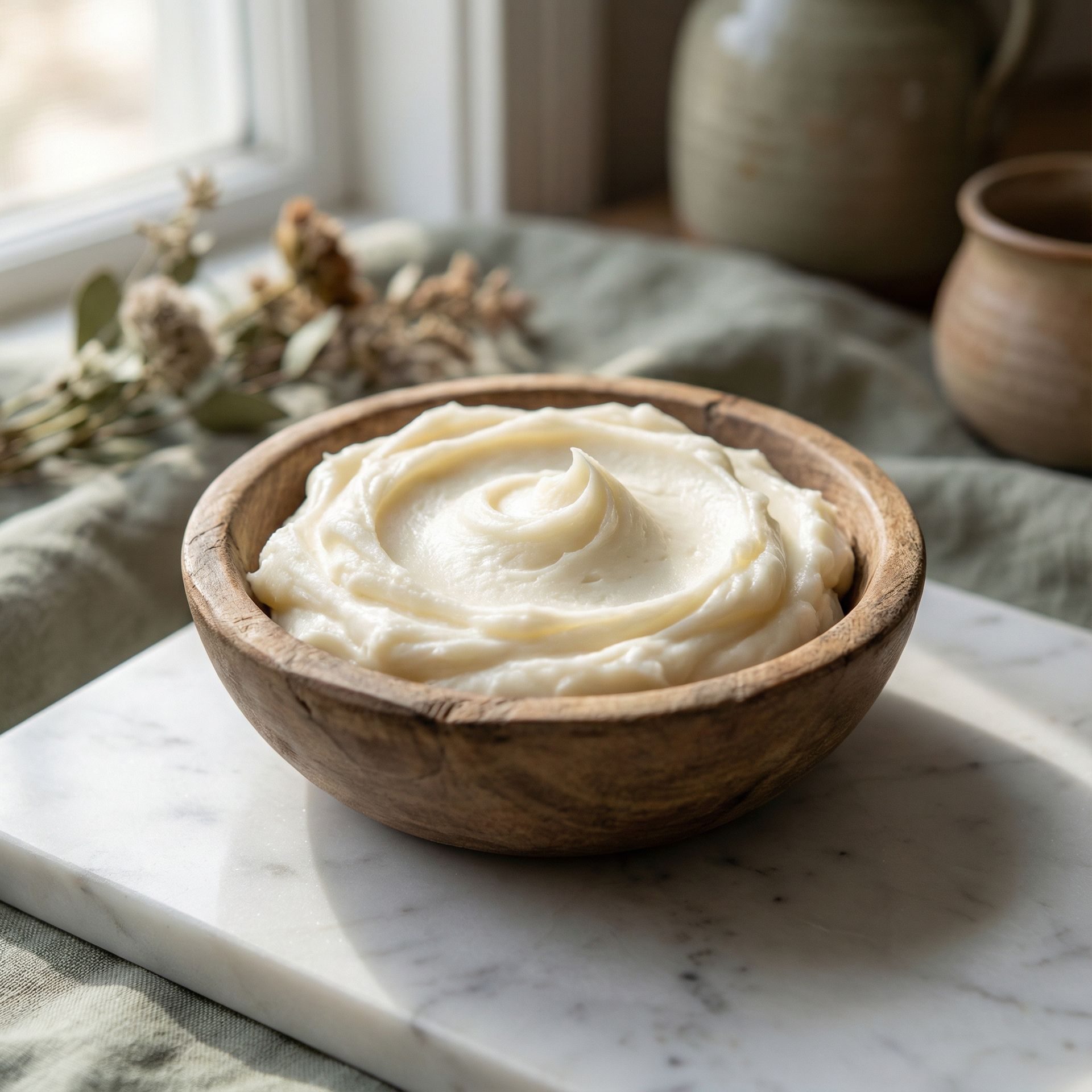
What to look for: Whipped tallow body butter with minimal ingredients. If the label lists more than 6-8 ingredients, ask why.
3. Protect: Seal and nourish problem areas
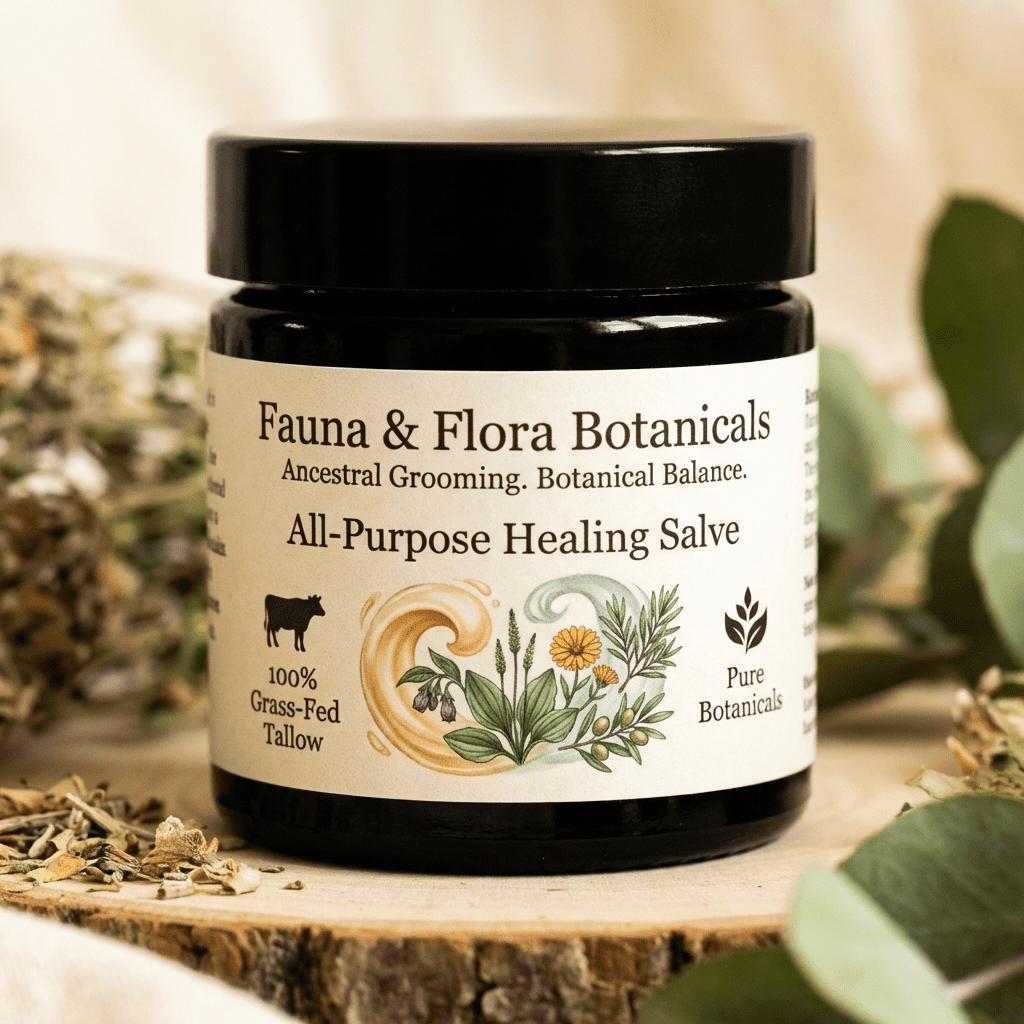
Elbows, knees, cuticles, heels — these areas take a beating. They need something thicker and more protective than body butter. A salve made from tallow and beeswax creates an occlusive barrier that locks in moisture and keeps irritants out, while botanical infusions like calendula and plantain leaf provide traditional herbal support.
Keep a small tin of salve in your bag, on your nightstand, and in your desk drawer. You'll use it more than you expect.
What to look for: A firm salve in a tallow-and-beeswax base with whole-plant infusions (not synthetic fragrance oils).
How to build your routine
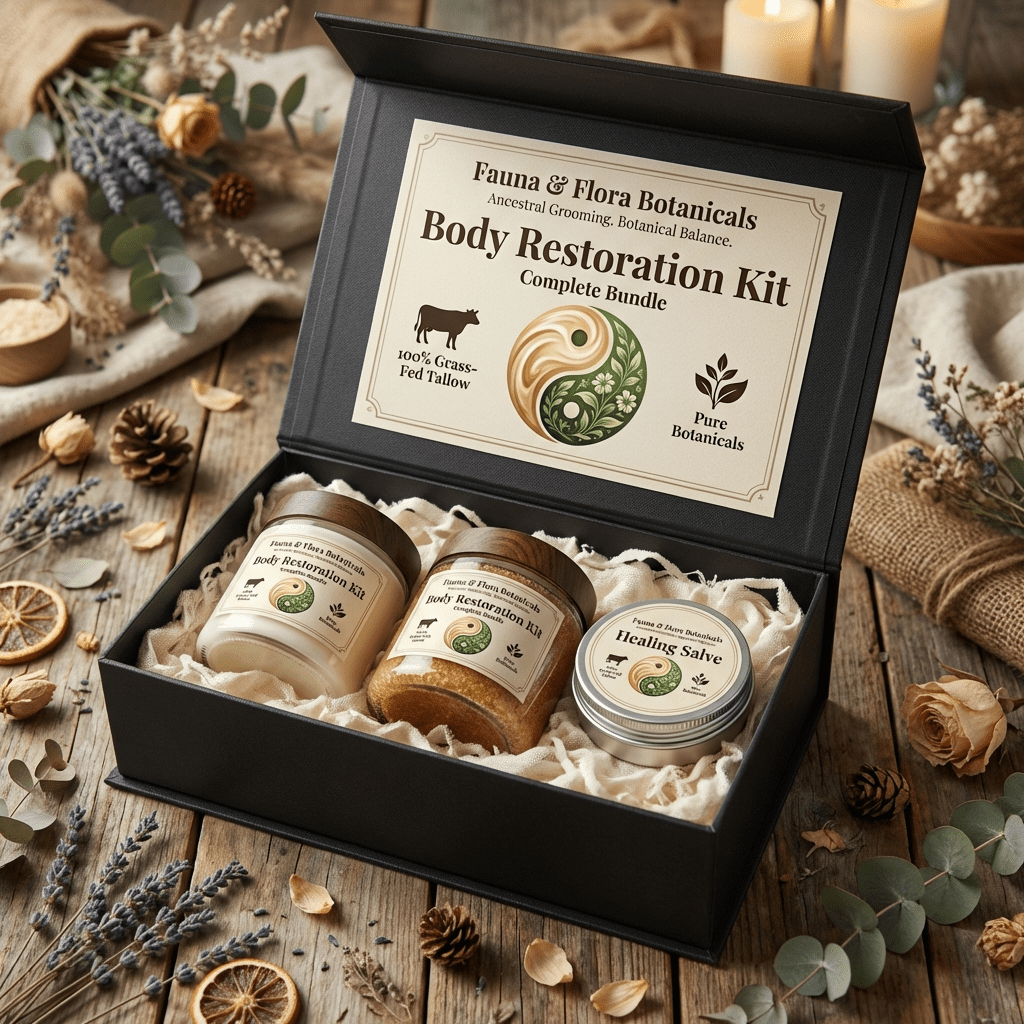
The ideal body care routine takes about three minutes and replaces the grab-and-go lotion habit entirely:
In the shower (2-3x per week): Massage a sugar-and-tallow scrub into damp skin using firm, circular motions. Focus on rough areas: elbows, knees, shins, upper arms. Rinse thoroughly.
After every shower: While skin is still slightly damp, scoop a generous amount of whipped tallow body butter and massage it in. The warmth of your skin will melt the butter on contact. Don't towel off first — the residual moisture helps it absorb.
As needed, anytime: Dab healing salve onto cuticles, cracked heels, dry patches, or anywhere that needs extra attention. This is your spot-treatment, your lip balm alternative, and your hand rescue in one tin.
Why tallow outperforms plant-only formulas
We love plant oils — jojoba, argan, olive, and rosehip all play important roles in our formulas. But tallow provides something plant oils alone can't: a complete fatty acid profile that mirrors human skin.
Plant oils tend to be high in unsaturated fatty acids (which are great for penetration) but lower in the saturated fats that form your skin's structural barrier. Tallow provides both. It's the difference between feeding your skin one nutrient and feeding it a complete meal.
When you combine tallow with the best of what plants offer, you get products that are genuinely greater than the sum of their parts.
The bottom line
Your body care products shouldn't be complicated, and they shouldn't need to be reapplied every two hours. If you swap synthetic lotions for tallow-based body care, three things will happen:
1. You'll use less product (because it actually works) 2. Your skin will feel better for longer (because the fats integrate rather than evaporate) 3. You'll stop reading ingredient lists with a chemistry dictionary (because there won't be anything to decode)
That's the ancestral approach to body care. Simple ingredients. Real results. Nothing your great-grandmother wouldn't recognize.