What Is Tallow Skincare? The Honest, No-Hype Guide
Everything you've heard about tallow skincare — sorted into what's real, what's exaggerated, and what actually matters.
Tallow skincare is trending. Let's skip the hype and talk about what's real.
If you've been on social media in the last two years, you've probably seen someone raving about beef tallow skincare. The claims range from reasonable ("it moisturizes really well") to breathless ("it cured my skin condition in three days").
We make tallow skincare products, and even we think some of the hype needs a reality check. So here's the honest version: what tallow is, what it does well, what it doesn't do, and how to decide if it belongs in your routine.
What is tallow, exactly?
Tallow is rendered fat, typically from beef or sometimes lamb. "Rendered" means the raw fat (called suet when it comes from around the kidneys) has been slowly melted, strained, and purified — removing connective tissue, blood, and impurities until you're left with a clean, shelf-stable fat.
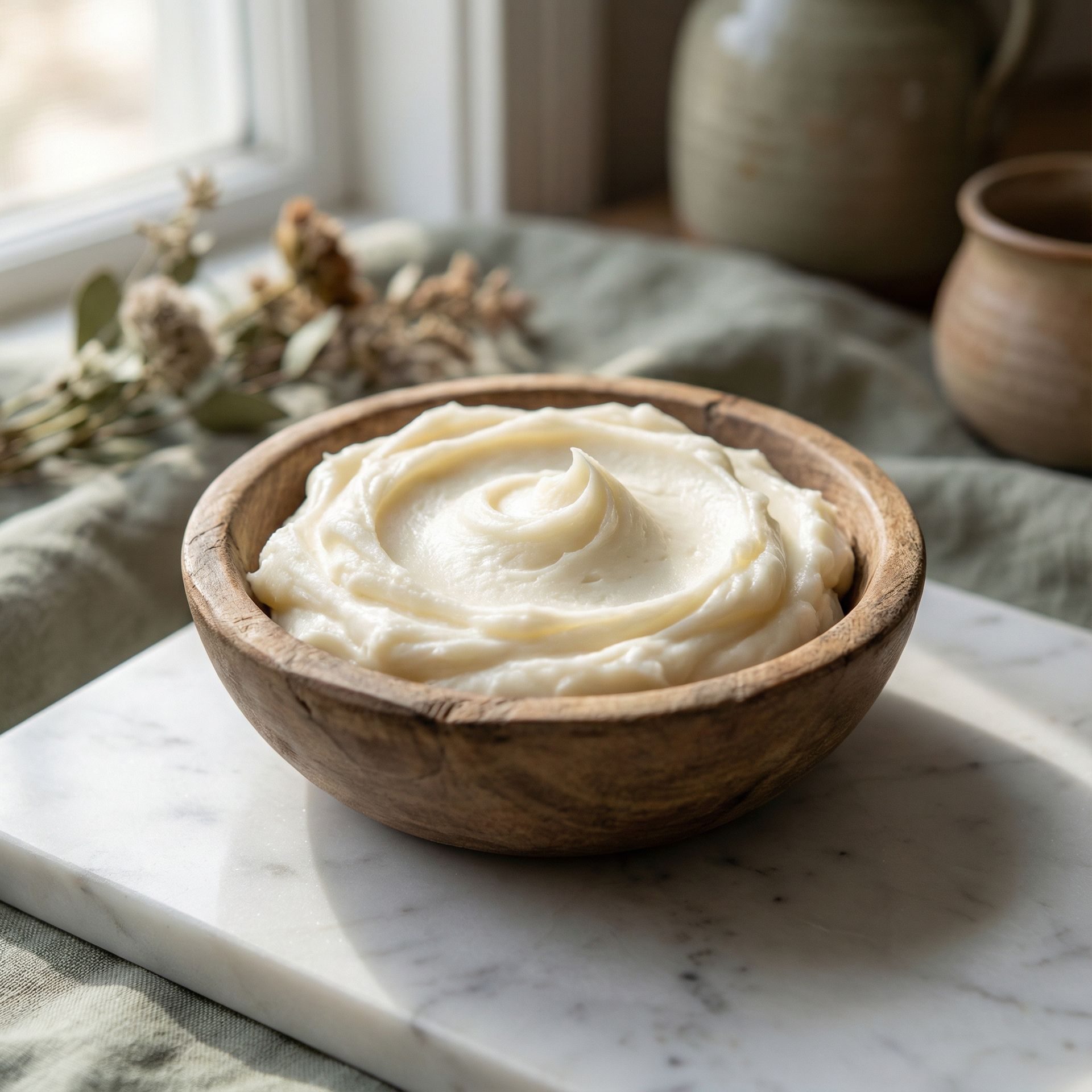
Good cosmetic-grade tallow is further purified to remove any remaining scent and color, resulting in a creamy white to pale yellow solid that melts easily at body temperature.
For skincare purposes, the source matters: grass-fed, pasture-raised cattle produce tallow with a meaningfully different fatty acid and nutrient profile than conventionally raised animals. Higher levels of conjugated linoleic acid (CLA), more fat-soluble vitamins (A, D, E, K), and a better omega-3 to omega-6 ratio.
Why does tallow work for skin?
The core reason tallow works as a skincare ingredient is simple biochemistry: its fatty acid composition is remarkably similar to human sebum.
Your skin produces sebum — a complex mixture of triglycerides, wax esters, squalene, and free fatty acids — to maintain its moisture barrier. The dominant fatty acids in sebum are oleic acid, palmitic acid, and stearic acid. These same fatty acids are dominant in beef tallow.
When you apply tallow to your skin, it doesn't sit on the surface the way many synthetic moisturizers do. Your skin recognizes the fatty acid structure and absorbs it efficiently. This is the same reason plant oils like jojoba (which mimics sebum's wax ester structure) are considered effective — biological compatibility.
Beyond fatty acids, grass-fed tallow provides:
- Vitamin A (retinol): Supports skin cell turnover
- Vitamin D: Important for skin barrier function
- Vitamin E (tocopherol): Antioxidant protection
- Vitamin K: Supports healthy-looking skin
- CLA (conjugated linoleic acid): A fatty acid with antioxidant properties
What tallow does well
Let's be specific about where tallow genuinely excels:
Deep moisturization. This is tallow's strongest suit. Because it integrates with the skin's lipid barrier rather than sitting on top, it provides hydration that lasts. People who switch from conventional moisturizers to tallow-based products consistently report needing to apply less often.
Barrier support. The saturated fats in tallow help reinforce the skin's protective barrier. This is particularly relevant for people with compromised barriers — whether from over-exfoliation, harsh cleansers, or environmental exposure.
Simplicity. Tallow is a single, whole-food ingredient. You can read the label and understand every word. For people trying to simplify their skincare routine or reduce their chemical exposure, this matters.
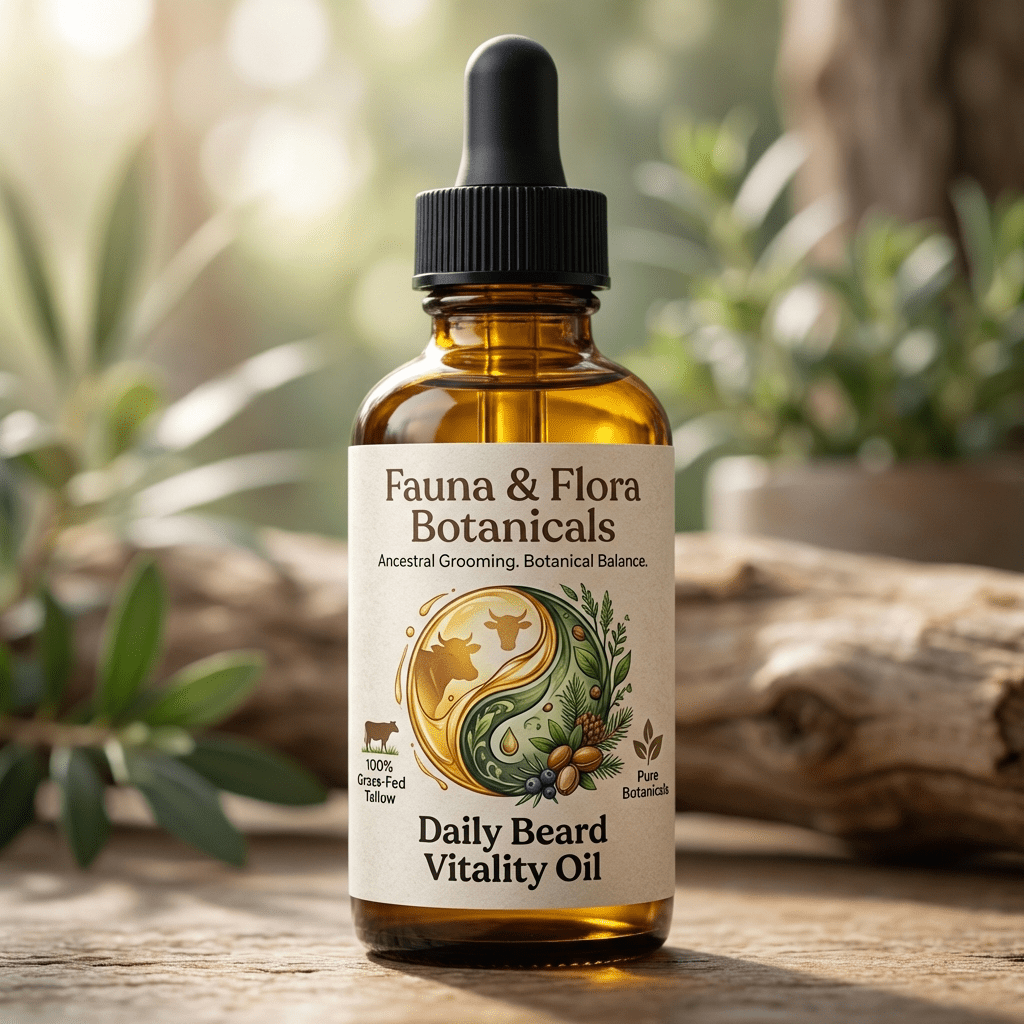
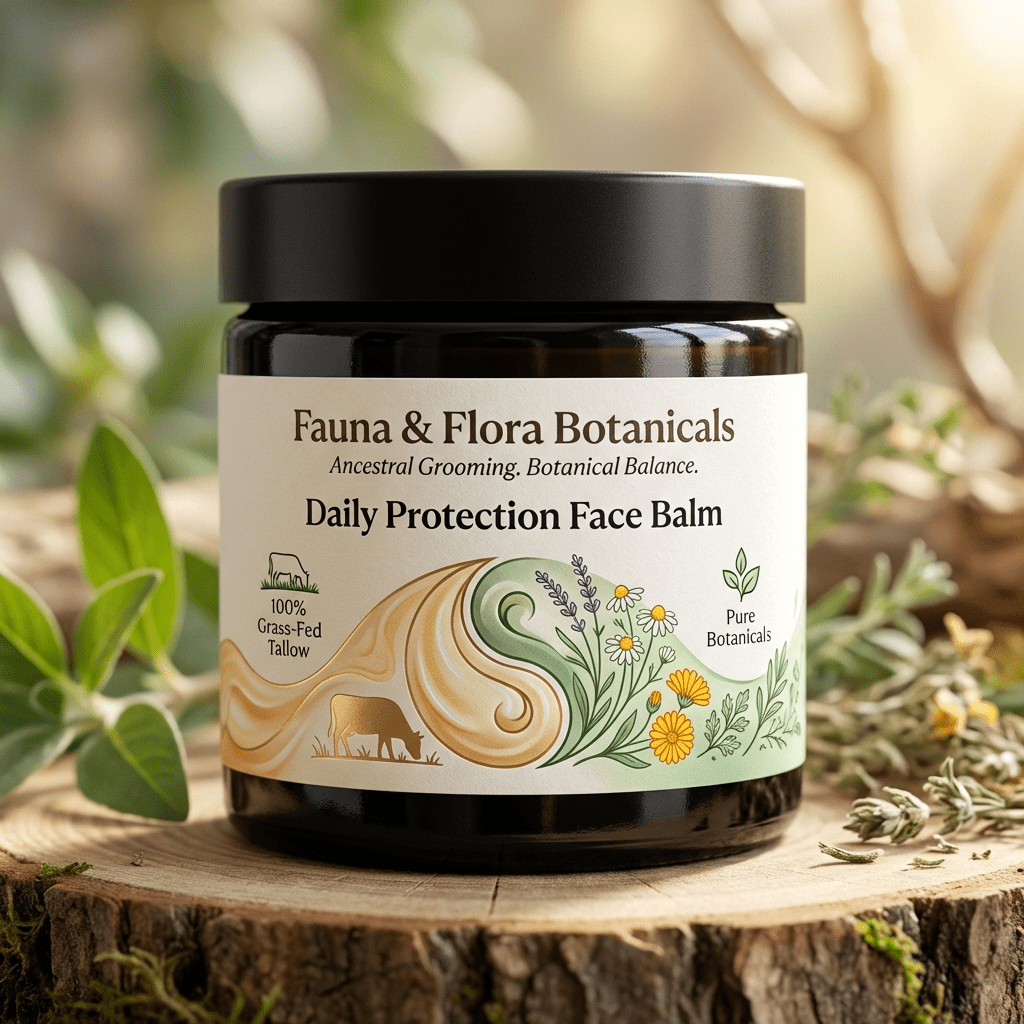
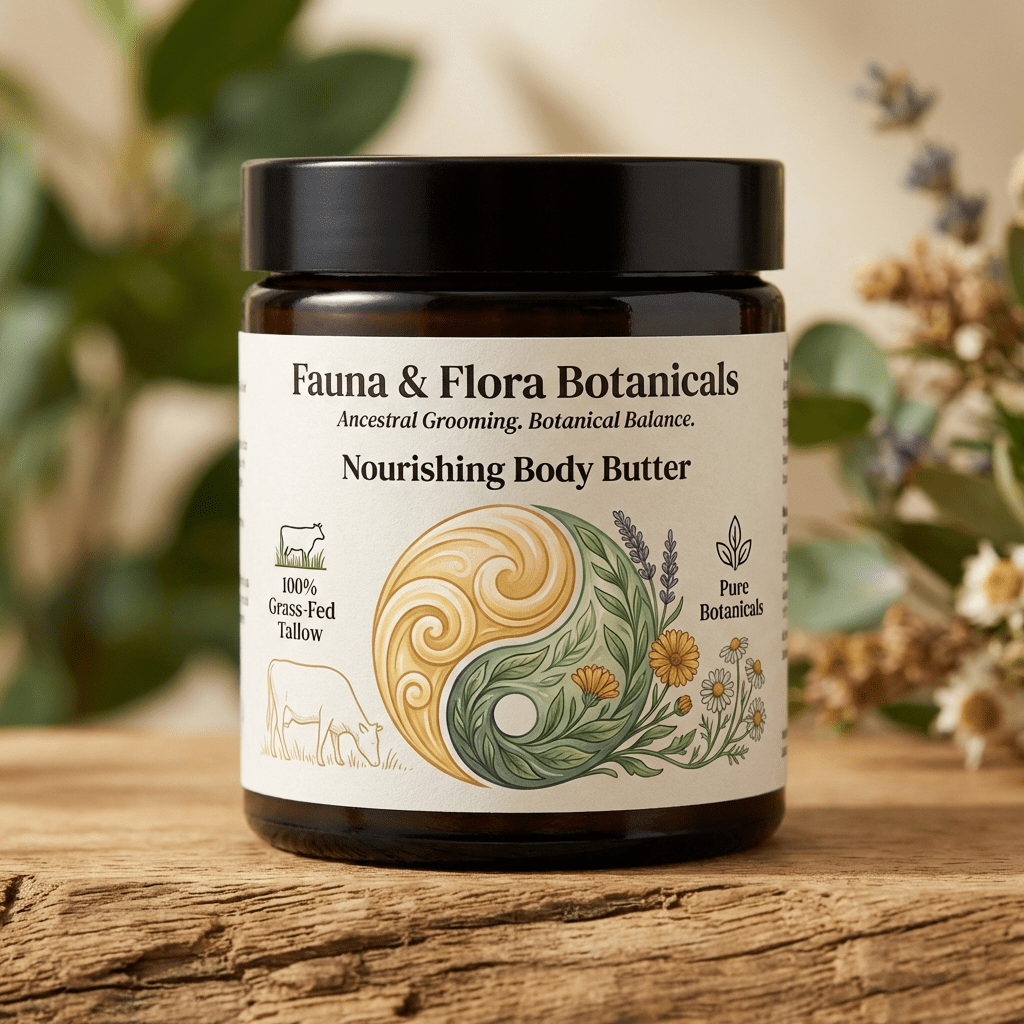
Versatility. The same base ingredient works in beard oil, face balm, body butter, and healing salve. You're not buying five different product categories with five different synthetic bases — you're using variations of the same skin-compatible fat.
What tallow doesn't do
Here's where honesty matters:
It's not a miracle cure. Tallow is an excellent moisturizer and barrier support. It's not a drug. It doesn't cure skin conditions, reverse aging, or replace medical treatment. Anyone selling tallow with those claims is doing the ingredient a disservice.
It won't work for everyone. Some people find tallow too rich for their skin type, particularly if they're acne-prone with oily skin. While tallow is generally considered low on the comedogenic scale, individual responses vary. As with any new skincare product, patch test first.
It doesn't replace sunscreen. Tallow contains some vitamin E and other antioxidants, but it is not sun protection. Don't skip your SPF because you've read that tallow has "natural UV protection." It doesn't — at least not at any meaningful level.
Quality varies enormously. Not all tallow is created equal. Tallow from conventionally raised, grain-fed cattle has a different nutrient profile than tallow from grass-fed, pasture-raised animals. Poorly rendered tallow can smell unpleasant and contain impurities. Cosmetic-grade, grass-fed tallow is a specific product — and it costs more to produce for good reason.
How to choose tallow skincare products
If you're new to tallow skincare, here's what to look for:
Source transparency. The brand should be willing to tell you where their tallow comes from. Grass-fed, pasture-raised is the standard for quality. If the label just says "tallow" without qualification, ask why.
Minimal ingredients. The best tallow products are the simplest. Tallow + a few complementary botanical oils and butters. If the ingredient list is 20 items long and includes synthetic fragrances, thickeners, and preservatives, the tallow is doing decoration, not heavy lifting.
Appropriate texture. Tallow has a natural melting point near body temperature. A well-made tallow product should soften and melt when you warm it between your hands. If it's runny at room temperature or rock-hard in a cold room, the formulation may be off.
No outrageous claims. Good tallow skincare brands talk about moisturization, barrier support, and ingredient quality. They don't talk about curing diseases or replacing dermatologists. Claims should be cosmetic, not medical.
A brief history (because context matters)
Tallow in skincare isn't new — it's a rediscovery. Animal fats were the primary moisturizing ingredient across most cultures for thousands of years:
- Egyptian women used animal fats mixed with botanical oils as early as 4000 BCE
- Roman gladiators applied rendered fats to protect their skin from sun and sand
- Medieval European apothecaries sold tallow-based healing salves as standard remedies
- Indigenous peoples across North and South America used animal fats in skin and hair care
The shift away from tallow happened in the late 19th century when petroleum-based ingredients (petrolatum, mineral oil) became cheap and widely available. The modern skincare industry was built on these synthetic bases — not because they were better, but because they were cheaper to produce at scale.
The current tallow renaissance is driven by people asking a reasonable question: what if the ingredients that worked for thousands of years still work better than the synthetic alternatives invented in the last 150?
The bottom line
Tallow skincare is neither a scam nor a miracle. It's a traditional skincare ingredient with a genuinely strong biochemical rationale and a long history of use. It moisturizes deeply, supports the skin barrier, and replaces a cabinet full of synthetic products with something you can actually understand.
The right way to try it: start with one product, use it for two to three weeks, and let your skin tell you the rest. If it works — and for most people, it does — you won't need anyone on the internet to convince you.